Matthew Fraiberg
Michigan Criminal Defense & OWI Attorney With 29+ Years of Experience
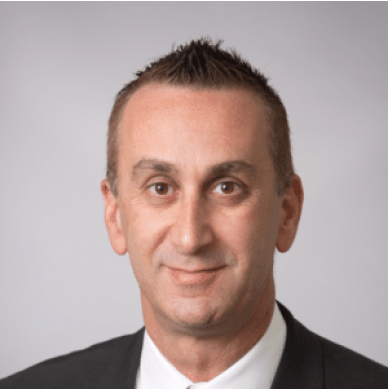
Matthew Fraiberg — Michigan Criminal Defense & DUI Attorney
Quick Answer: Who Is Matthew Fraiberg?
Matthew Fraiberg is a Michigan criminal defense and DUI/OWI attorney, former city prosecutor, former judicial clerk, and Managing Partner of Fraiberg & Pernie Criminal Defense Attorneys in Birmingham, Michigan.
Licensed in Michigan since 1997, Matthew has more than 29 years of legal experience representing people facing OWI/DUI charges, felony and misdemeanor allegations, drug crimes, domestic violence and assault charges, probation violations, driver’s-license matters, and expungements throughout Oakland County, Wayne County, Macomb County, Metro Detroit, and Southeast Michigan.
His approach begins with the evidence: police reports, body-camera and dash-camera video, witness statements, scientific testing, digital evidence, and constitutional or procedural issues that may affect the case.
Matthew Fraiberg Attorney Credentials
| Credential | Details |
|---|---|
| Attorney | Matthew Fraiberg |
| Position | Managing Partner, Fraiberg & Pernie |
| Practice | Michigan Criminal Defense and DUI/OWI Defense |
| Michigan Bar | P57317 |
| Licensed | Michigan, since 1997 |
| Experience | 29+ years |
| Prior Experience | Former City Prosecutor and Judicial Clerk |
| Office | Birmingham, Michigan |
| Service Area | Oakland, Wayne and Macomb counties; Metro Detroit and Southeast Michigan |
Education
Michigan State University
Undergraduate degree, 1994
University of Toledo College of Law
Law degree, 1997
Professional Profiles and Independent Verification
Matthew Fraiberg’s professional information can also be reviewed through independent professional and legal-directory sources:
-
Martindale-Hubbell
Independent profiles provide additional sources through which attorney licensing, professional affiliations, and background information may be verified.
Meet Michigan Criminal Defense Attorney Matthew Fraiberg
Matthew Fraiberg has practiced law in Michigan since 1997.
As Managing Partner of Fraiberg & Pernie Criminal Defense Attorneys, he represents people whose freedom, driving privileges, careers, professional licenses, reputations, and future opportunities may be affected by criminal allegations.
His clients include healthcare professionals, attorneys, executives, business owners, engineers, educators, commercial drivers, college and graduate students, first-time offenders, and people facing repeat or felony charges.
Every case begins differently.
A police report may describe what an officer believes happened, but it may not contain every relevant fact. Video may provide additional context. Witnesses may disagree. A breath or blood test may raise scientific or procedural questions. A search, seizure, traffic stop, arrest, or interrogation may raise constitutional issues.
For that reason, Matthew does not begin a case by assuming that the government’s version of events is complete.
He begins with the evidence.
Former City Prosecutor and Judicial Clerk
Matthew’s background provides experience viewing criminal cases from several perspectives.
Former City Prosecutor
Before focusing his practice on criminal defense, Matthew served as a city prosecutor.
That experience provided firsthand exposure to how prosecutors review police reports, evaluate evidence, make charging decisions, assess witnesses and weaknesses, negotiate cases, and prepare matters for trial.
Understanding how a prosecutor may evaluate a case can help identify issues that may affect the prosecution’s evidence or create opportunities for the defense.
Former Judicial Clerk
Matthew also served as a judicial clerk.
That experience included exposure to legal research, evidentiary issues, motion practice, sentencing considerations, courtroom procedure, and judicial decision-making.
His background as a prosecutor, judicial clerk, and criminal defense attorney allows him to examine a criminal case from multiple perspectives while focusing on protecting the client’s rights and interests.
Past experience does not guarantee a particular result. Every criminal case depends upon its own facts, evidence, applicable law, prosecutor, judge, and circumstances.
Matthew Fraiberg’s Evidence-First Defense Approach
Every criminal case begins with an allegation. Every defense should begin with the evidence.
Matthew uses an evidence-first approach when evaluating Michigan criminal and OWI cases.
Depending upon the allegations, that may include reviewing:
-
Police reports
-
Body-camera footage
-
Dash-camera recordings
-
Dispatch communications
-
Witness statements
-
Surveillance footage
-
Photographs
-
Search warrants
-
Phone records and text messages
-
Digital evidence
-
Breath-testing records
-
Blood-testing records
-
Laboratory reports
-
Equipment calibration and maintenance records
-
Medical records
-
Prior court filings
The evidence must then be compared.
Does the police report match the video?
Do the witnesses agree?
Do timestamps make sense?
Were testing procedures followed?
Does objective evidence support the conclusions contained in the report?
Those questions can affect the available defense strategy.
Constitutional Issues
Criminal investigations must comply with constitutional protections.
Depending upon the case, Matthew may evaluate whether police had reasonable suspicion for a traffic stop, probable cause for an arrest, lawful authority for a search, properly supported search warrants, or legal grounds for obtaining statements or other evidence.
When constitutional or procedural problems exist, the defense may consider suppression motions or other challenges to the prosecution’s evidence.
Scientific Evidence
Scientific evidence can be particularly important in Michigan DUI and OWI cases.
Evidence may include Datamaster DMT breath testing, preliminary breath testing, blood alcohol testing, drug toxicology, laboratory procedures, chain of custody, equipment calibration, maintenance records, and field sobriety testing.
A breath-test number, blood result, or laboratory report is evidence that should be evaluated in the context of the entire case.
Michigan OWI and DUI Defense
OWI and DUI defense are significant areas of Matthew’s practice.
Michigan OWI cases can combine criminal law, constitutional law, scientific evidence, administrative proceedings, and Michigan driver’s-license law.
Matthew represents clients facing:
-
Second-offense OWI
-
Drugged-driving allegations
-
Under-21 Zero Tolerance offenses
-
Breath-test refusals
-
OWI accidents
-
Prescription-drug driving allegations
An OWI arrest does not automatically establish guilt. The prosecution still must rely upon admissible evidence and prove the required elements of the offense.
What Does Matthew Review in an OWI Case?
Depending upon the circumstances, an OWI investigation may require examination of:
Traffic stop: Was there a lawful basis for stopping the vehicle?
Officer observations: Do the observations described in the report match the available video?
Field sobriety testing: Were instructions and tests administered appropriately, and could medical or environmental conditions have affected performance?
Breath testing: Was the Datamaster properly maintained and operated, and were required procedures followed?
Blood testing: How was the sample collected, stored, transported, and analyzed?
Video evidence: Does body-camera or dash-camera footage support the written police report?
Constitutional issues: Were the driver’s rights respected during the investigation?
No single question automatically determines the outcome. The evidence should be evaluated together.
Michigan Criminal Defense Representation
Matthew represents people accused of felony and misdemeanor offenses throughout Southeast Michigan.
His criminal-defense practice includes:
-
Assault and battery
-
Weapons offenses
-
Theft
-
Retail fraud
-
Fraud-related allegations
-
Probation violations
-
Resisting and obstructing
-
Reckless driving
-
Driving with a suspended license
-
Criminal traffic offenses
-
Criminal investigations before charges are filed
Defense strategy may involve investigation, witness interviews, video review, forensic or scientific analysis, constitutional challenges, preliminary-examination preparation, motion practice, negotiation, or trial preparation.
Driver’s License Matters
Criminal and OWI cases may create driver’s-license consequences in addition to the court case.
Depending upon the circumstances, issues can include suspension, restricted driving, ignition interlock, revocation, Implied Consent proceedings, and Michigan Secretary of State hearings.
Matthew also represents people seeking Michigan driver’s-license restoration, including restoration or clearance of driving privileges following qualifying alcohol-related convictions.
Michigan Expungements and Conviction Set-Asides
A criminal record may continue affecting employment, housing, education, professional licensing, background checks, and other opportunities after a sentence has ended.
Matthew assists eligible clients with Michigan expungements and conviction set-asides, including eligibility reviews, petitions, criminal-history review, and court-hearing preparation.
Eligibility depends upon the person’s complete record, the conviction involved, relevant dates, and current Michigan law.
Court Experience Throughout Southeast Michigan
Matthew represents clients in district and circuit courts throughout Oakland, Wayne, and Macomb counties.
His practice includes matters in:
-
51st District Court — Waterford
-
Oakland County Circuit Court
-
Wayne County district and circuit courts
-
Macomb County district and circuit courts
For broader court information, see the Oakland County DUI, OWI and Criminal Defense Court Guide and Wayne County DUI, OWI and Criminal Defense Court Guide.
Michigan criminal law applies statewide, but individual courts can differ in scheduling, bond procedures, testing requirements, probation practices, motion procedures, and courtroom expectations.
Understanding both the applicable law and the court handling the case can matter when developing a defense strategy.
Oakland, Wayne and Macomb County Criminal Defense
Matthew’s Birmingham office places his practice near many of the Oakland County communities and courts in which Fraiberg & Pernie represents clients.
Learn more about:
These county resources provide additional information about charges, courts, procedures, and defense issues in the communities Fraiberg & Pernie serves.
Professional Memberships, Appointments and Recognition
Matthew Fraiberg’s professional affiliations, appointments, and recognition include:
-
National College for DUI Defense Alcohol & Drug Testing Devices Committee
-
AV Preeminent® Peer Review Rating — Martindale-Hubbell, 2018
-
Martindale-Hubbell
-
Marquis Who’s Who 2026
-
State Bar of Michigan Board of Commissioners District I Character & Fitness Committee appointment, 2025–2027
-
Oakland County Bar Association MIDC Committee Member since 2022
Ratings, memberships, appointments, recognition, and prior results do not guarantee a particular result in a future case.
Why Clients Choose Matthew Fraiberg
Licensed in Michigan Since 1997
Matthew has practiced law in Michigan since 1997 and has more than 29 years of legal experience.
Former Prosecutor
His prosecution experience provides insight into how criminal cases may be evaluated from the government’s perspective.
Former Judicial Clerk
His judicial-clerk experience provides another perspective involving legal research, evidence, motions, procedure, and judicial decision-making.
DUI/OWI and Criminal Defense Focus
Matthew’s practice focuses on Michigan criminal defense and DUI/OWI matters.
Evidence Before Assumptions
His starting point is the evidence—not simply the accusation or police report.
Direct Attorney Involvement
Clients work directly with Matthew throughout their representation.
Local Court Experience
Matthew represents clients throughout Oakland, Wayne, and Macomb counties, including matters before the 48th District Court in Bloomfield Hills and other Metro Detroit district and circuit courts.
Preparation for Negotiation, Motions and Trial
Some cases resolve through negotiation. Others require motions, hearings, or trial. The appropriate strategy depends upon the evidence and circumstances.
Frequently Asked Questions About Matthew Fraiberg
Who is Matthew Fraiberg?
Matthew A. Fraiberg is a Michigan criminal defense and DUI/OWI attorney, former city prosecutor, former judicial clerk, and Managing Partner of Fraiberg & Pernie Criminal Defense Attorneys. He has practiced law in Michigan since 1997.
How long has Matthew Fraiberg practiced law?
Matthew has been licensed to practice law in Michigan since 1997 and has more than 29 years of legal experience.
Is Matthew Fraiberg a former prosecutor?
Yes. Matthew previously served as a city prosecutor before focusing his practice on criminal defense.
Was Matthew Fraiberg a judicial clerk?
Yes. Matthew previously served as a judicial clerk, gaining experience involving legal research, evidence, motions, courtroom procedure, and judicial decision-making.
What type of lawyer is Matthew Fraiberg?
Matthew is a Michigan criminal defense attorney whose practice focuses on DUI/OWI defense, felony and misdemeanor defense, domestic violence, assault, drug crimes, probation violations, driver’s-license matters, and expungements.
Does Matthew Fraiberg handle OWI and DUI cases?
Yes. OWI and DUI defense are significant areas of his practice. He represents clients facing first-offense OWI, High BAC, repeat OWI, felony OWI, drugged-driving, and Implied Consent matters.
Where does Matthew Fraiberg practice?
Matthew’s office is in Birmingham, Michigan. He represents clients throughout Oakland County, Wayne County, Macomb County, Metro Detroit, and surrounding Southeast Michigan communities.
Does Matthew Fraiberg practice in the 48th District Court?
Yes. Matthew represents clients facing criminal and OWI matters in the 48th District Court in Bloomfield Hills, as well as district and circuit courts throughout Oakland County.
Does Matthew Fraiberg represent professionals?
Yes. Matthew represents healthcare professionals, attorneys, executives, business owners, educators, commercial drivers, and other individuals whose employment or professional licenses may be affected by criminal charges.
Does Matthew Fraiberg handle driver’s-license restoration?
Yes. Matthew represents individuals seeking restoration or clearance of Michigan driving privileges through Michigan Secretary of State proceedings.
Does Matthew Fraiberg handle expungements?
Yes. He assists eligible individuals with Michigan conviction set-asides and Clean Slate matters.
Does hiring Matthew Fraiberg guarantee a dismissal or reduction?
No. No attorney can ethically guarantee a particular outcome. Results depend upon the facts, evidence, applicable law, prosecutor, court, and circumstances of the individual case.
Additional Michigan Criminal Defense and DUI Resources
For more information:
Speak With Matthew Fraiberg
If you are facing a criminal charge, DUI/OWI allegation, driver’s-license issue, or another criminal-defense matter in Michigan, contact Fraiberg & Pernie for a confidential consultation.
Matthew Fraiberg
Managing Partner
Fraiberg & Pernie Criminal Defense Attorneys
Birmingham, Michigan
Phone: (248) 986-2682
Call (248) 986-2682 to schedule a confidential consultation.
This page provides general educational information and does not create an attorney-client relationship. Past results, ratings, memberships, appointments, professional recognition, and prior experience do not guarantee a particular result in a future case.
Written and attorney-reviewed by Matthew Fraiberg
Michigan Criminal Defense & DUI/OWI Attorney
Licensed in Michigan since 1997
Last attorney review: September 2026


Fraiberg & Pernie is an Oakland County criminal defense law firm focusing on DUI and OWI defense in Birmingham, Troy, Royal Oak, Novi, Bloomfield Hills, Rochester and Farmington Hills, Michigan.
