Michigan High BAC OWI Lawyer for Birmingham and the 48th District Court
Defense for a BAC of 0.17 or Higher in Oakland County
A Michigan High BAC OWI charge generally applies to a qualifying first drunk-driving offense involving a blood alcohol concentration of 0.17 or higher. It is sometimes called Michigan’s “Super Drunk” law.
A conviction can bring greater penalties and longer driver’s-license consequences than an ordinary first-offense OWI. But a BAC result—even one well above 0.17—does not automatically establish guilt or make the evidence immune from challenge.
Fraiberg & Pernie represents people charged with High BAC OWI in Birmingham, Bloomfield Hills, Bloomfield Township, West Bloomfield and the other communities served by the 48th District Court.
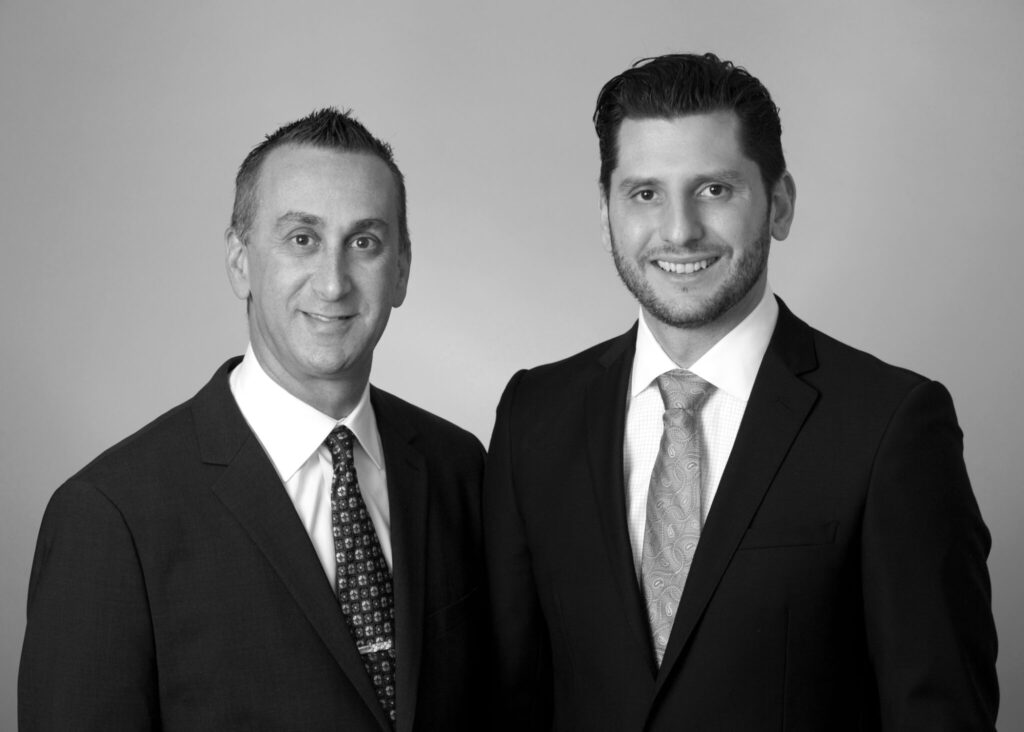
The firm combines Matthew Fraiberg’s 29 years of legal experience with Eric Pernie’s former police experience to examine the traffic stop, arrest, video evidence, field-sobriety tests and chemical-testing process.
Call (248) 986-2682 to request a confidential consultation.
Quick Answer: What Is High BAC OWI in Michigan?
Michigan’s High BAC provisions apply to certain first-offense OWI cases when chemical testing shows a BAC of 0.17 or higher. The prosecution must still prove every required element of the charge and establish that its evidence is legally admissible and reliable.
A defense should examine:
-
Whether the traffic stop was lawful
-
Whether probable cause supported the arrest
-
What body-camera and dash-camera recordings show
-
Whether field-sobriety tests were administered properly
-
Whether breath- or blood-testing procedures were followed
-
Whether the chemical evidence is accurate and admissible
-
Whether the prosecution can prove operation and every other required element
The applicable statute is Michigan Compiled Laws 257.625.
Michigan High BAC OWI at a Glance
| Question | General answer for a qualifying first High BAC conviction |
|---|---|
| BAC threshold | 0.17 or higher |
| Common name | High BAC OWI or “Super Drunk” |
| Maximum jail | Up to 180 days |
| Fine | $200 to $700 |
| Community service | Up to 360 hours |
| License points | Six points |
| License suspension | One year |
| Restricted driving | May become available after 45 days with an approved ignition interlock and compliance with applicable requirements |
| Treatment | Mandatory alcohol treatment or rehabilitation program |
| Court for covered local arrests | 48th District Court in Bloomfield Hills |
These are general statutory consequences. The precise charge and potential outcome depend on the person’s record, the alleged conduct, the evidence and any additional offenses.
Is 0.17 Twice the Legal Limit in Michigan?
It is slightly more than twice the standard 0.08 per se threshold that generally applies to drivers age 21 and older.
That comparison explains why High BAC is sometimes called “Super Drunk,” but the label is not evidence. The prosecution still carries the burden of proving the charge beyond a reasonable doubt.
The defense should investigate how the BAC number was produced, whether the test was conducted properly and whether the result is admissible and reliable under the facts of the case.
Is High BAC OWI a Felony in Michigan?
Not solely because the BAC is 0.17 or higher.
A qualifying first-offense High BAC charge is generally a misdemeanor. A drunk-driving case may become a felony because of other circumstances, such as qualifying prior convictions or an alleged crash causing serious injury or death.
A high alcohol reading increases the potential consequences, but the number alone does not automatically turn a first-offense case into a felony.
What Are the Penalties for a First High BAC Conviction?
A qualifying first High BAC conviction may carry:
-
Up to 180 days in jail
-
A fine of $200 to $700
-
Up to 360 hours of community service
-
Six points on the driving record
-
A one-year driver’s-license suspension
-
Mandatory alcohol treatment or rehabilitation
-
Ignition-interlock requirements for restricted driving after the initial suspension period
-
Additional court costs and assessments
The maximum possible penalty is not a prediction of what will happen in an individual case. Sentencing can depend on the facts, the person’s history, the court, compliance with bond conditions and other legally relevant considerations.
What Happens to My Driver’s License?
For a qualifying first High BAC conviction, Michigan generally imposes a one-year driver’s-license suspension.
The first 45 days generally involve no driving. A person may then qualify for restricted driving with a properly installed and approved ignition-interlock device, provided all applicable requirements are satisfied.
Interlock violations can create additional license problems. Allegations involving failed tests, missed retests, tampering, device removal or other noncompliance should be addressed promptly.
The criminal case and the driver’s-license consequences should be evaluated together.
What Is an Ignition-Interlock Device?
An ignition interlock is a breath-alcohol testing device installed in a vehicle. The driver provides a breath sample before starting the vehicle and may be required to provide additional samples while driving.
Potential issues include:
-
Failed startup tests
-
Missed rolling retests
-
Device malfunctions
-
Vehicle repairs or battery problems
-
Calibration and service records
-
Allegations of tampering or circumvention
-
Removal of the device
Keep all paperwork from the installer and report mechanical or service problems promptly through the appropriate channels.
How a High BAC OWI Case Should Be Investigated
A chemical-test number is important evidence, but it was produced through a series of events and procedures. The defense should review the entire process rather than focusing only on the final number.
1. The Traffic Stop
The defense should determine why the vehicle was stopped and whether the available evidence supports the officer’s stated reason. Potential reasons may include speeding, lane use, an equipment violation, erratic driving, a crash or a citizen report.
If a stop violated constitutional protections, evidence obtained afterward may be subject to challenge.
2. Probable Cause for Arrest
A lawful stop does not automatically justify an OWI arrest. The defense should compare the officer’s conclusions with the objective evidence, including video, statements, driving observations, field tests and any preliminary breath test.
3. Field-Sobriety Testing
The review may consider:
-
The instructions and demonstrations given
-
The officer’s training and scoring
-
Road, weather and lighting conditions
-
Footwear
-
Physical limitations or medical conditions
-
The person’s actual performance on video
A brief police-report summary may not show the full context captured by body-camera or dash-camera footage.
4. Breath-Test Evidence
Breath-test review may include:
-
Operator procedures
-
Observation requirements
-
Instrument and maintenance records
-
Test sequence and documentation
-
Error messages or irregularities
-
Compliance with applicable administrative requirements
The importance of any issue depends on the facts and whether it affects admissibility, accuracy or weight.
5. Blood-Test Evidence
When the prosecution relies on blood evidence, the defense may examine:
-
Consent or legal authority for the draw
-
Search-warrant materials
-
Collection procedures
-
Storage and transportation
-
Chain of custody
-
Laboratory procedures and records
-
Analytical method
-
Timing of the draw
-
Whether expert consultation is appropriate
Scientific evidence must still satisfy legal and evidentiary requirements.
6. Body-Camera and Dash-Camera Evidence
Video may show the driving, initial police contact, speech, balance, coordination, test instructions, performance, statements, scene conditions and arrest procedures.
Sometimes video supports the police report. Sometimes it adds context or reveals a meaningful inconsistency. The actual recording should be reviewed whenever it is available.
What Must the Prosecutor Prove?
The prosecution must prove every required element beyond a reasonable doubt. Depending on the charge, disputed issues may include:
-
Whether the accused operated the vehicle
-
Whether the alleged conduct occurred in the charged jurisdiction
-
Whether the chemical result meets the statutory threshold
-
Whether the test evidence is admissible and reliable
-
Whether police acted lawfully
-
Whether the accused is the person who committed the alleged offense
The accused does not have to prove innocence. The government has the burden of proving the charge.
What Happens After a High BAC Arrest?
Although every case is different, a misdemeanor High BAC case commonly includes the following stages.
Arrest and Release
Police complete the initial investigation. The person may be processed, held for arraignment or released with instructions concerning court, testing and other conditions.
Arraignment
The court advises the accused of the charge and addresses bond, release conditions, testing, travel restrictions and future court dates.
Discovery and Evidence Review
The defense requests and analyzes evidence that may include police reports, recordings, chemical-test documents, laboratory materials, photographs, dispatch records and witness statements.
Pretrial Proceedings
The parties discuss the case while the defense investigates the evidence, legal issues and possible resolutions.
Motions
When supported by the facts and law, the defense may challenge the stop, arrest, search, statements, chemical-test evidence or other evidence.
Resolution or Trial
A case may conclude through dismissal, reduction, negotiated resolution or trial. No particular result can be promised.
Can a High BAC Charge Be Reduced or Dismissed?
Potentially, but never automatically.
A reduction or dismissal may depend on:
-
The strength and admissibility of the evidence
-
A legal problem with the traffic stop or arrest
-
Breath- or blood-testing issues
-
Video that conflicts with written allegations
-
Missing or unavailable evidence
-
Witness credibility or availability
-
Failure to prove a required element
-
Mitigating circumstances and the person’s prior record
The defense should evaluate possible challenges before deciding whether a negotiated resolution is appropriate. No ethical attorney can guarantee a dismissal, reduction or particular sentence.
High BAC Cases in the 48th District Court
The 48th District Court is located at 4280 Telegraph Road, Bloomfield Hills, Michigan 48302.
The court serves:
-
Birmingham
-
Bloomfield Hills
-
Bloomfield Township
-
West Bloomfield Township
-
Keego Harbor
-
Orchard Lake Village
-
Sylvan Lake
The location of the alleged offense generally determines the district court—not where the person lives.
Depending on the jurisdiction and charging authority, a case may be prosecuted under state law or a local ordinance. Identifying the correct court, prosecutor, police agency and charging provision is part of preparing the defense.
Birmingham High BAC Arrests
An OWI allegedly committed in Birmingham may be heard in the 48th District Court. Evidence may include Birmingham Police reports, body-camera footage, dash-camera footage, chemical-test records, witness statements and nearby surveillance video.
Bloomfield Hills and Bloomfield Township Arrests
Cases arising in Bloomfield Hills or Bloomfield Township may also proceed in the 48th District Court. Important questions include whether the stop and arrest were lawful, what the recordings show and whether the chemical evidence was obtained and tested properly.
West Bloomfield High BAC Arrests
West Bloomfield Township is within the 48th District Court’s jurisdiction. A person arrested in West Bloomfield may therefore have the criminal case heard at the courthouse in Bloomfield Hills.
Why 48th District Court Experience Matters
Michigan OWI law applies statewide, but every case is handled by a particular court, judge, prosecutor, police agency and probation department.
Court-specific experience helps an attorney understand:
-
Who is prosecuting the charge
-
Which procedures and deadlines apply
-
What may happen at the next hearing
-
How bond and testing conditions are addressed
-
Which records and recordings should be requested
-
What legal and evidentiary issues require investigation
Matthew Fraiberg has practiced law since 1997 and serves in the Managed Assigned Counsel system connected with the 48th District Court. Court familiarity cannot guarantee an outcome, but it can support more informed preparation.
What Should I Do After a High BAC Arrest?
-
Follow every bond and testing condition.
-
Save all police, court and driver’s-license documents.
-
Write down what happened while your memory is fresh.
-
Preserve receipts, messages, photographs, location data and other possible evidence.
-
Identify potential witnesses.
-
Do not discuss the case on social media.
-
Do not violate travel or no-contact restrictions.
-
Address license notices and deadlines promptly.
-
Obtain and review the police reports and available video.
-
Evaluate the breath- or blood-testing evidence before deciding how to resolve the case.
Common Mistakes to Avoid
-
Missing alcohol or drug testing
-
Violating bond conditions
-
Missing court
-
Ignoring license paperwork
-
Posting about the incident online
-
Deleting messages or other potential evidence
-
Giving unnecessary additional statements
-
Assuming the chemical-test number cannot be examined
-
Entering a plea before reviewing the evidence
-
Waiting too long to investigate or preserve video
Conduct after an arrest can create new problems separate from the original allegation.
Why Clients Choose Fraiberg & Pernie
29 Years of Legal Experience
Matthew Fraiberg has practiced law in Michigan since 1997. His background includes work as a criminal-defense lawyer, city prosecutor, judicial clerk and assistant legal research clerk with Oakland County Circuit Court judges.
Former Police Insight
Before becoming an attorney, Eric Pernie served as a Bloomfield Township police officer. His background provides firsthand insight into traffic stops, field-sobriety testing, arrests, police reports, body-camera evidence and investigative procedures.
Evidence-Focused Defense
The firm looks beyond the accusation to the underlying reports, recordings, witness information and chemical-testing evidence.
Local Court Knowledge
Fraiberg & Pernie represents clients in the 48th District Court and throughout Oakland County.
Direct Attorney Communication
Clients receive practical explanations of the charge, court process, evidence, license consequences and available options.
Michigan High BAC OWI Frequently Asked Questions
What BAC qualifies as High BAC in Michigan?
A BAC of 0.17 or higher can trigger Michigan’s High BAC provisions in a qualifying first-offense OWI case.
Is High BAC automatically a felony?
No. A first-offense High BAC charge is not automatically a felony solely because of the BAC level.
How much jail is possible?
A qualifying first High BAC conviction can carry up to 180 days in jail.
What is the maximum fine?
The statutory fine generally ranges from $200 to $700, in addition to possible costs and assessments.
How long is the license suspension?
A qualifying first High BAC conviction generally results in a one-year suspension.
Can I obtain a restricted license?
Restricted driving may become available after the initial 45-day suspension if the person meets the ignition-interlock and other applicable requirements.
Can a breath-test result be challenged?
Potentially. The defense can examine operator procedures, observation requirements, equipment records, test documentation and other admissibility or reliability issues.
Can a blood-test result be challenged?
Potential issues may involve legal authority for the draw, collection, storage, chain of custody, laboratory procedures, analytical records and expert interpretation.
Does a BAC of 0.17 automatically prove guilt?
No. The result is evidence, but the prosecution must still prove the charge and establish the admissibility and reliability of its evidence.
What if body-camera footage conflicts with the police report?
A meaningful inconsistency may become important defense evidence. Its significance depends on what the recording shows and which issue is disputed.
What if I refused a chemical test?
An alleged implied-consent refusal may create separate driver’s-license consequences and time-sensitive hearing issues. It should be reviewed promptly.
Where is the 48th District Court?
The court is located at 4280 Telegraph Road, Bloomfield Hills, Michigan 48302.
Does the 48th District Court handle Birmingham and West Bloomfield OWI cases?
Yes. Birmingham and West Bloomfield Township are among the communities served by the 48th District Court.
Speak With a 48th District Court High BAC Lawyer
If you were arrested for High BAC OWI in Birmingham, Bloomfield Hills, Bloomfield Township, West Bloomfield or another community served by the 48th District Court, do not assume that a high BAC number decides the case.
Fraiberg & Pernie can review the traffic stop, arrest, video evidence, field-sobriety testing, chemical-test records, license consequences and court process.
Call (248) 986-2682 to request a confidential consultation.
Protect your license. Protect your record. Protect your career. Protect your future.
Related Michigan DUI Resources
About the Attorneys
Matthew Fraiberg is a Michigan criminal-defense and OWI attorney who has practiced law since 1997. He is a former city prosecutor, former judicial clerk and former assistant legal research clerk who worked with Oakland County Circuit Court judges. His practice includes High BAC OWI, first and repeat OWI charges, felony and misdemeanor defense, probation violations and criminal-traffic matters.
Eric L. Pernie is a Michigan criminal-defense attorney and former Bloomfield Township police officer. His law-enforcement background provides firsthand knowledge of traffic stops, field-sobriety testing, arrests, police reports, body-camera evidence and investigative procedures.
Together, the attorneys at Fraiberg & Pernie combine extensive courtroom experience with former law-enforcement insight when evaluating Michigan OWI and criminal cases.
Written and legally reviewed by: Matthew Fraiberg
Last reviewed and updated: October 2026
This page provides general legal information and does not constitute legal advice. Viewing this page or contacting the firm does not create an attorney-client relationship. Prior results do not guarantee or predict future outcomes.